
Horse care records: keeping a useful history
The farrier has visited, a date has been suggested for the next appointment, and the information ends up in a chat. Useful care records bring together what has happened and what still needs arranging, so you can find the facts when you need them.
By the Paddoco team ·
Jump to frequently asked questions
Start with a record you can make sense of later
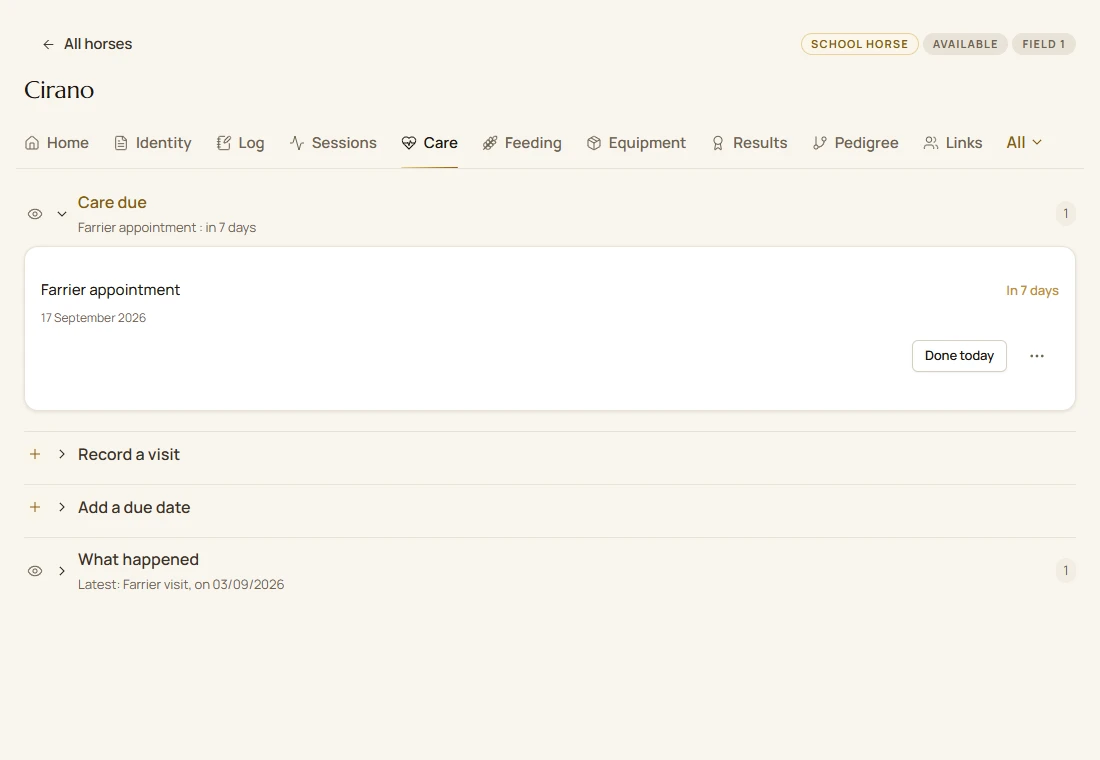
In Paddoco, care records start on the horse’s profile. The Journal holds events from their life; the Care tab brings together visits and due dates. Before adding an entry, check which horse it concerns and when the event actually happened. The date you enter a record is not always the date of the visit.
A precise title and a short note are easier to find than a simple “done”. Record what was carried out and the information the professional gave you. If a detail is missing, leave it to be confirmed rather than filling it in from memory.
Separate facts, observations and next steps
- The fact: the visit took place on a particular date, with the work carried out identified.
- The observation: what you noticed, described simply, without turning it into a diagnosis.
- The next step: the appointment agreed or the question to ask the professional.
An example to adapt: “The farrier visited this morning. Next appointment to be confirmed with them.” This wording separates a completed visit from a date that is still uncertain. It is a writing example, not a testimonial or a recommended interval between visits.
A due date is a reminder of something still to do
Paddoco lets you set a due date with a label, category and reminders. You can also specify a time or a repeat interval where appropriate. Use the dates and intervals agreed with the professional responsible for your horse’s care; an app setting does not determine what your horse needs.
Once the appointment has taken place, record the completed visit and check the next due date. If it is postponed, update the planned date. Receiving a reminder or reaching a date does not establish that the care was given.
Check who can view and edit
A horse’s profile does not need to show everyone the same information. Access in Paddoco depends on permissions for the horse, roles within the yard and visibility settings. Before sharing responsibility for records, check the relevant people’s access and agree who will log each visit.
A simple routine to keep records useful
After a visit, check the date, title and next action. Before the next appointment, find the previous entry and prepare any outstanding questions. The records help you share an accurate history; care decisions remain a matter for the appropriate professional.
Frequently asked questions about care records
What should I record after a farrier or vet visit?
Record the actual date of the visit, the work carried out and the information provided by the professional. Add the next action once it has been agreed. Keep your observations separate and do not present them as a diagnosis.
Does an overdue reminder automatically become a completed care record?
No. A reminder represents a planned action. Once the visit has taken place, record what happened in the horse’s history and check the next date. If the appointment was postponed, update the reminder rather than implying that the visit took place.
Should every care appointment repeat?
No. A one-off visit can have a single date. Only set a repeat interval when one has been agreed with the relevant professional. Paddoco helps organise appointments; the app does not decide how often care is needed.
How can we avoid duplicate entries when several people care for a horse?
Agree who will record each visit. Before adding an entry, check the latest notes and the date. In Paddoco, also make sure each person has the appropriate permission to view or edit the horse’s profile.