
Horse training diary: what to record for next time
After a ride, “that went well” captures an impression but does little to help you plan the next one. A few facts and a question to revisit can leave a useful record, for yourself or for the person riding the horse after you.
By the Paddoco team ·
Jump to frequently asked questions
Record what will help you remember
On the horse’s profile, Paddoco lets you log a session with its type, date, duration and notes. You can also specify the rider, time and an exercise. Intensity and how the session felt can be added if you wish. There is no need to turn every ride into an exhaustive report.
- The goal: what you intended to work on before starting.
- What happened: the exercise you actually did and any changes made during the session.
- The reflection: a specific observation and something to discuss with your instructor.
If your plan changed, record the work you actually did. Keeping the original goal in the note can explain the change, but should not imply that the planned exercise was completed. A diary is useful when it describes the session as it happened.
Write a note that will still make sense later
An example entry: “Goal: maintain a steady pace on turns. Replaced the planned exercise with simpler work. To discuss with my instructor: preparing the left turn.” This example illustrates how to structure a note; it is not a training programme to follow.
Describing a situation is more useful than labelling the horse. Focus on the circumstances and what you observed rather than broad conclusions. When several riders are involved, this gives them a starting point for discussion without presenting one person’s impression as a shared fact.
Link the session to an exercise you can find again
Paddoco’s exercise picker lets you link an accessible exercise to the horse’s session. Its title becomes a reference in the history. Your notes can then explain what changed that day instead of copying the whole exercise description. Library access still depends on your account’s permissions.
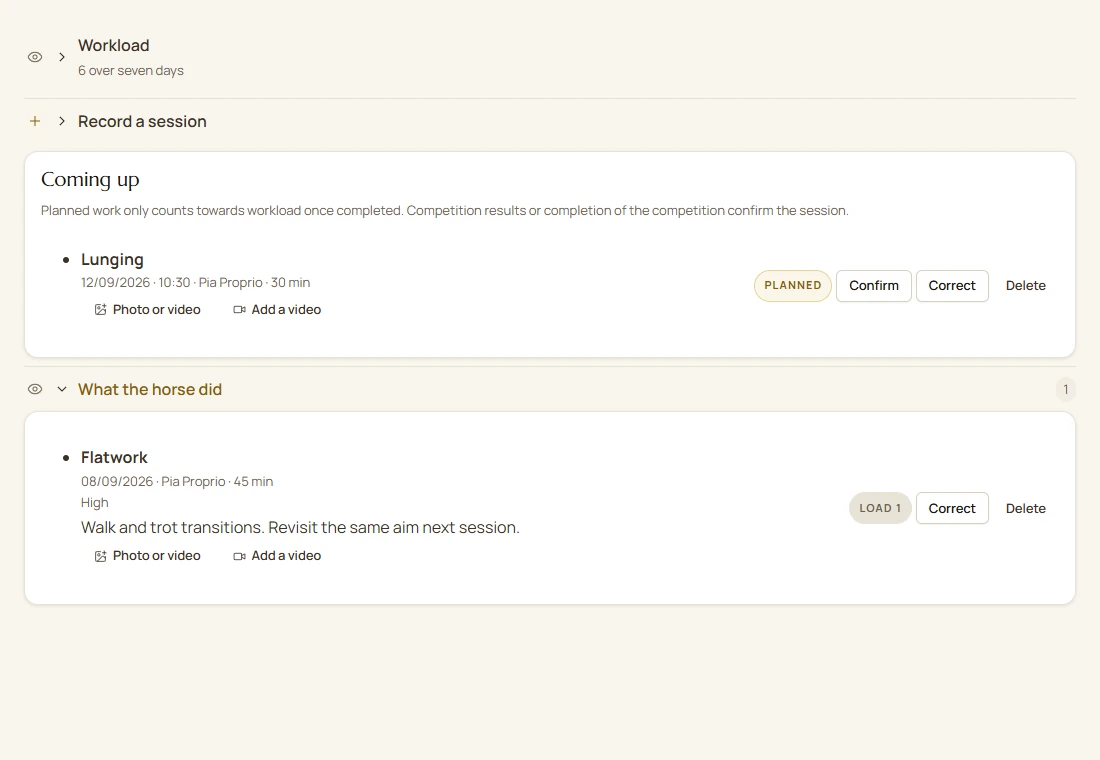
A planned session is not a completed session
A session entered in advance remains planned until it is marked as completed. Paddoco distinguishes these states when tracking work. Once the session has taken place, confirm it and add any useful details. If it did not take place, correct the plan so the history does not describe work that never happened.
Look back before planning what comes next
The horse’s session list can bring together logged sessions, lessons and hacks they have taken part in, subject to access permissions. Look back at what was actually done and any questions left open. This history supports discussion with your instructor; it does not decide on its own what work is suitable for the horse.
Frequently asked questions about a training diary
What should I record after a riding session?
Keep the date, type of work, duration and a note on what you actually did. An aim and one point to revisit are often enough to prepare for the next session. In Paddoco, a feeling and an intensity rating can add context.
Does a planned session count as work already completed?
No. In Paddoco, a future session remains planned until it is confirmed as completed. Afterwards, check its duration and notes so that the history reflects the work actually done.
Can I find the exercise used during a session?
A session can be linked to an exercise in Paddoco. The link helps you find the exercise again. Add a note explaining what you actually did or adapted during the session.
Do lessons and hacks belong in the training history?
Yes. The horse’s history can bring together lessons, recorded training sessions and hacks, depending on the information available and your access permissions. Review the whole picture to understand the horse’s week, rather than just the sessions you entered yourself.